How to Choose a Home Builder in Texas
Choosing the right builder is one of the most important decisions you’ll make when planning a new home. If you’re researching how to choose a home builder in Texas, don’t base your decision on the advertised price or a few impressive project photos. You need to understand how each builder works, which responsibilities they take on, how they manage costs, and whether their approach matches your expectations.
A home building project involves many connected decisions, from design and materials to scheduling, approvals, and construction. Your builder will coordinate many of these activities, so their approach can influence the entire project. Take time to compare your options before signing an agreement to reduce the risk of misunderstandings later.
How to Choose a Home Builder in Texas: Start With Your Project Needs
Before comparing builders, get clear about the home you want to build. A builder who suits a straightforward residential project may not be the right fit for a customized home with specific design, structural, or site requirements.
Start by outlining:
- Type of home: Are you planning a custom home, a more conventional new build, a duplex, or another residential project?
- Size and layout: Have you decided on the approximate size, number of rooms, and main features?
- Design expectations: Do you already have architectural plans, or will you need design support?
- Property status: Do you own the land, or are you still evaluating potential sites?
- Budget: What is your expected construction budget, and which features matter most?
- Project responsibilities: Do you want one team to coordinate several stages, or will you arrange separate professionals?
These details give you a clearer basis for comparing proposals. They also help builders understand what you expect them to deliver.
If you are still working through the early planning stages, the broader How to Start a Construction Project: Step-by-Step Guide explains how project scope, budgeting, design, approvals, and professional selection fit together.
1. Look for Relevant Home-Building Experience
A builder’s experience should match the home you want to build. A long list of completed projects means little if those projects differ significantly from yours.
For example, if you’re planning a custom home with a particular layout, architectural style, or set of structural requirements, ask whether the builder has handled comparable work.
When reviewing experience, consider:
- The types of residential projects the builder has worked on.
- Whether they have experience with homes of a similar size and complexity.
- Whether their work includes the level of customization you expect.
- How they approach design coordination and construction planning.
- Whether they can explain the challenges involved in projects similar to yours.
Ask to see relevant examples and request details about the builder’s role in each project. Find out whether they managed the full construction process or handled only certain stages.
You can also read What Does a Custom Home Builder Actually Do? to understand the responsibilities a custom home builder may take on during planning, design coordination, budgeting, and construction.
The goal is not to find a builder who claims to do everything. It is to find one whose actual experience and responsibilities match your project’s requirements.
2. Understand What the Builder Will Handle
Two builders may offer similar-looking proposals while taking on very different responsibilities. One may handle design coordination, budgeting, scheduling, and construction management. Another may provide only a narrower construction service.
Before making a decision, ask the builder to explain exactly what the proposal includes.
Depending on the agreement and project structure, responsibilities may involve:
- Reviewing the project scope and initial requirements.
- Coordinating design and engineering inputs.
- Preparing or reviewing construction estimates.
- Planning the work and construction schedule.
- Coordinating subcontractors, suppliers, and site activities.
- Monitoring work against the agreed scope.
- Communicating progress and decisions.
- Managing approved changes during construction.
Do not assume that every builder provides all these services. Ask who will handle each responsibility and whether the proposal includes it or prices it separately.
This is especially important when several professionals are involved. You should know who will coordinate their work and whom you should contact when a decision or issue needs attention.
For a more detailed look at the steps involved in a custom build, see How to Build a Custom Home: A Step-by-Step Guide.
3. Review the Builder’s Process and Communication
A builder’s process tells you a lot about what working with them may look like. Before hiring anyone, understand how they move from an initial discussion to construction and how they keep homeowners informed along the way.
Ask the builder to walk you through the main stages of your project.
You should understand:
- What information they need before preparing a proposal.
- How they will review the design and project scope.
- When they will discuss the budget and major material selections.
- How they will develop the construction schedule.
- Who will serve as your main point of contact.
- How often they will provide progress updates.
- How they will communicate questions, delays, and unexpected issues.
Pay attention to how the builder responds during your early conversations. Do they listen carefully to your requirements? Do they explain unfamiliar terms? Are they clear about what they can confirm and what still needs investigation?
A useful conversation should leave you with a better understanding of the project, not more uncertainty.
Ask How the Builder Will Handle Changes
Changes can arise when a homeowner adjusts the design, selects different materials, or requests additional work. Before signing, understand how the builder records and manages these changes.
Ask whether the builder will explain each change in writing, including its effect on cost or schedule, before proceeding with the work.
A clear process helps both sides understand what they have approved and what the revised agreement includes.
4. Compare Estimates, Budgets, and What’s Included
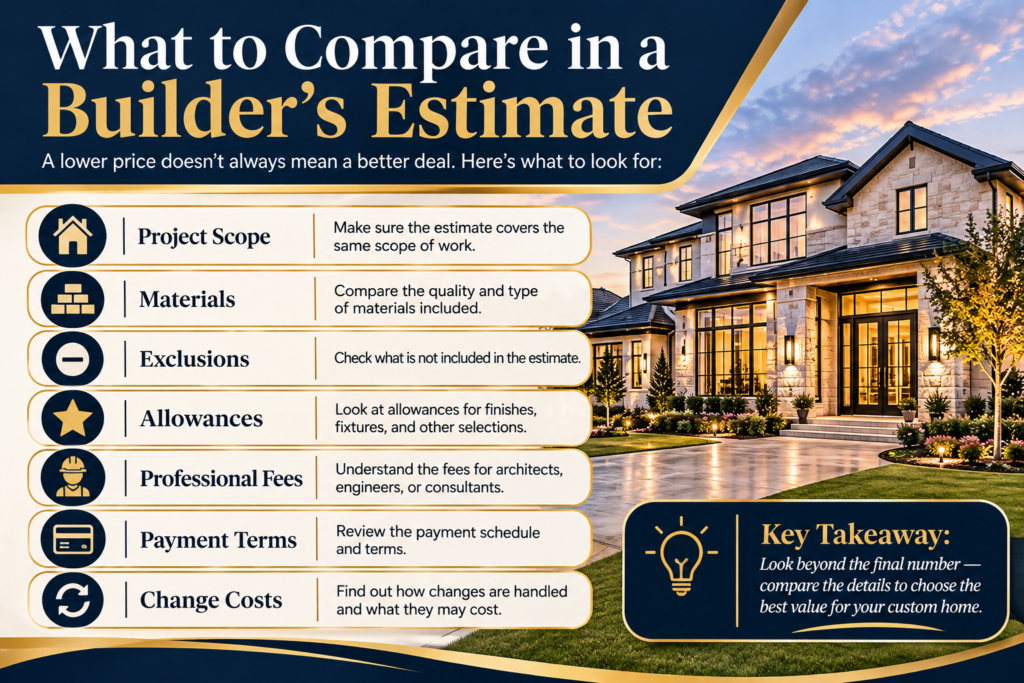
The lowest estimate is not automatically the best choice. Two builders may quote different prices because their proposals cover different materials, services, allowances, or project responsibilities.
When you compare proposals, look beyond the final number.
A useful estimate should help you understand:
- The work included in the proposed scope.
- Materials, finishes, and specifications covered by the price.
- Items the builder excludes or prices separately.
- Allowances for selections you have not finalized.
- Design, engineering, and other professional fees, where applicable.
- Site preparation and other property-specific work, where applicable.
- The expected payment structure.
- How the builder will price additional work and changes.
If one proposal is significantly lower than another, ask the builder to explain the difference. The builder may have excluded work that another proposal covers, or they may have used different material specifications.
Avoid comparing proposals until you understand whether they cover the same scope.
Check How the Builder Will Manage the Budget
Your initial estimate is only useful if you understand how the builder will manage costs as the project develops.
Ask:
- Who will track project costs?
- How will the builder tell you when an expense changes?
- Who approves material upgrades or substitutions?
- What happens if site conditions require additional work?
- How will changes to the original scope affect the budget?
If you want to understand the wider cost factors involved in a custom home, read Custom Home Construction Cost: What Should You Budget For?
That resource is particularly useful when you are deciding whether a builder’s estimate reflects the full project or only part of the work.
5. Read the Contract Before You Commit
A verbal discussion or attractive proposal is not a substitute for a clear written agreement. Before hiring a builder, read the contract carefully and make sure it reflects what you have discussed.
For a residential construction project in Texas, this is an important step. Section 53.255 of the Texas Property Code requires an original contractor to provide the owner with a residential construction contract disclosure statement before the contract is executed. The statutory disclosure advises homeowners to investigate the contractor and get the agreement in writing.
You can review the provision in the Texas Property Code, Section 53.255.
Understand the Texas Contract Disclosure
Take time to review the disclosure statement and understand the information it provides. It gives homeowners guidance on investigating a contractor and documenting the agreement before construction begins.
Do not treat the disclosure as a replacement for reviewing the actual contract. You should still check the project’s scope, costs, responsibilities, and other agreed terms.
Check What Your Home-Building Contract Includes
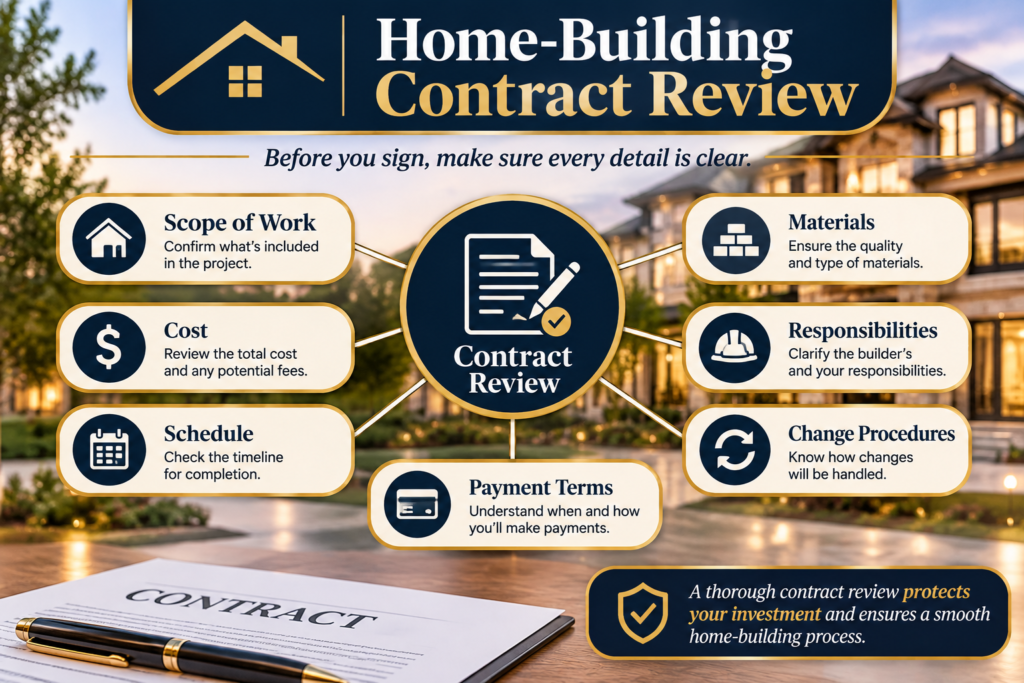
As you review the agreement, check whether it clearly explains:
- Scope of work: What exactly will the builder complete?
- Project cost: What is the agreed price, or how will the builder determine the final cost?
- Schedule: What are the estimated or required start and completion dates?
- Payment terms: When must you make payments, and what conditions apply to each payment?
- Materials and specifications: Which materials, finishes, and products does the price include?
- Changes: How will both sides document and price changes to the original scope?
- Responsibilities: What will the builder handle, and what remains your responsibility?
- Final completion: What must the builder complete before you consider the project finished?
Make sure the builder includes every important promise from your meetings or calls in the written agreement.
Clarify Uncertain Terms Before Signing
If something is unclear, ask the builder to explain it before you sign. Do not rely on verbal assurances when the written agreement says something different.
For additional consumer guidance on written bids, references, and contractor agreements, the Texas Attorney General’s guide to avoiding home improvement scams is also worth reviewing. Although it focuses on home improvement work, its advice about checking references, comparing written bids, and reviewing contracts is useful when assessing a contractor.
If the contract includes unfamiliar legal terms or creates obligations you do not understand, consider having a qualified attorney review it before you commit.
6. Check References and Look for Warning Signs
A builder’s portfolio shows examples of their work, but conversations with previous clients can tell you more about the working relationship.
Ask the builder for references from homeowners whose projects are comparable to yours. If possible, speak with more than one client.
Useful questions include:
- Was the builder clear about the original scope and budget?
- Did the builder answer questions consistently and in a reasonable way?
- Did the builder explain changes before proceeding?
- How did the builder handle unexpected issues?
- Did the builder provide progress updates as expected?
- Did the builder complete the work according to the agreed plans and specifications?
- Is there anything the homeowner would approach differently if starting again?
You can also ask whether you can visit a completed project or, with permission, view work in progress.
Watch for These Warning Signs
Take extra care if a builder:
- Pressures you to sign before you have reviewed the agreement.
- Avoids providing a written estimate or clear scope of work.
- Cannot explain what the quoted price includes.
- Gives vague answers about who will manage the project.
- Makes promises that do not appear in the written proposal.
- Refuses to explain how changes will affect cost or timing.
- Offers a price that is unusually low without explaining why.
- Is unwilling to provide relevant references.
One warning sign does not automatically mean a builder is unsuitable. However, repeated evasive answers or pressure to commit should make you pause and investigate further.
If you are still comparing potential builders, How to Find Custom Home Builder options for Your Project covers the earlier research and shortlisting stage. Use it alongside this guide when you want to review your options before making a final selection.
7. Consider Texas and Houston Project Requirements
Choosing a home builder in Texas also means considering where you plan to build. Each city, county, and property can have different requirements and site conditions.
A builder should be prepared to discuss the local considerations that may affect your project. You should also understand which authority has jurisdiction over the property.
For a Houston-area home, for example, confirm whether the property falls within the City of Houston or another local jurisdiction. Permits, inspections, drainage reviews, and other requirements may differ depending on the location and scope of work.
You should also discuss property-specific considerations such as:
- Soil conditions and foundation design.
- Drainage and flood exposure.
- Site access and preparation.
- Utility availability and connections.
- Local permits and required approvals.
- Design choices that respond to the property’s conditions.
Do not assume that a builder’s experience in one Texas city automatically means every local requirement will be the same elsewhere.
For more detail on these location-specific considerations, read How to Build a House in Texas: What to Know Before You Start.
The right builder should be willing to explain which issues need checking, which professionals may need to get involved, and what you must confirm before construction begins.
A Final Checklist Before Choosing Your Builder
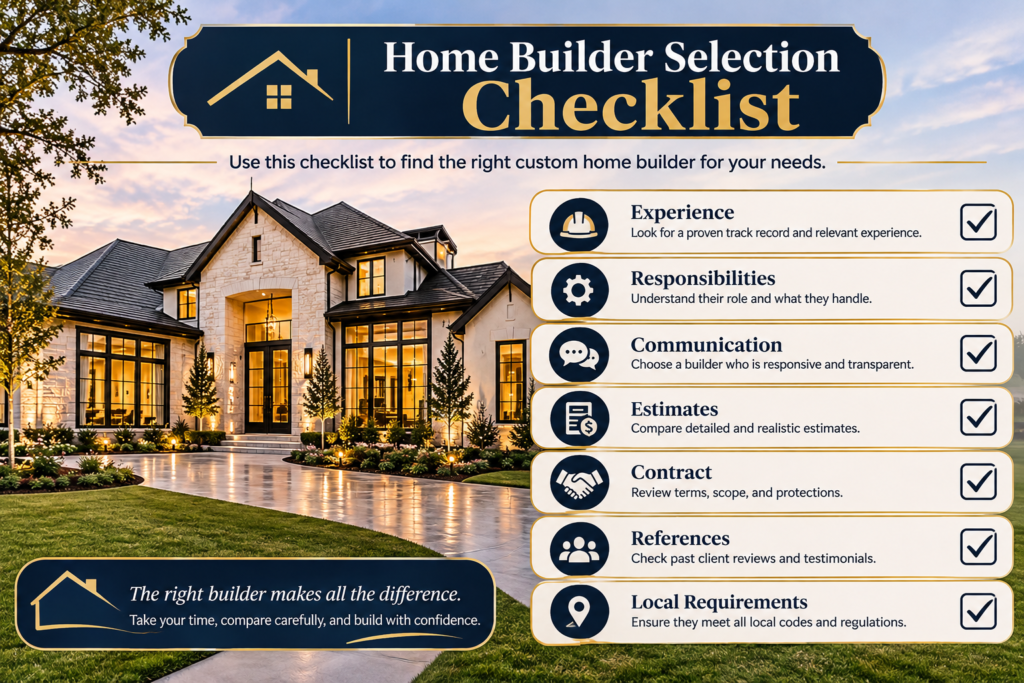
Before making your final decision, use this checklist to compare your options.
| What to check | Questions to answer |
|---|---|
| Relevant experience | Has the builder handled projects similar to yours? |
| Project responsibilities | Do you understand what the builder will and will not handle? |
| Process | Can the builder explain the major stages of the project? |
| Communication | Do you know who your main contact will be and how updates will work? |
| Estimate | Is the scope clear, with exclusions and allowances identified? |
| Budget management | Do you understand how the builder will handle costs and changes? |
| Contract | Does the written agreement reflect your discussions and agreed terms? |
| References | Have you spoken with previous clients or reviewed relevant completed work? |
| Local requirements | Have you discussed the relevant property and jurisdiction-specific considerations? |
| Overall fit | Does the builder understand your priorities and communicate clearly? |
When deciding how to choose a home builder in Texas, look at the complete picture. A suitable builder should explain their responsibilities, provide a clear basis for the proposed cost, discuss the project process, and put important agreements in writing.
Do not rush the decision because one estimate looks attractive or a builder promises an especially quick start. Take the time to compare the details and make sure you understand what you are agreeing to.
Frequently Asked Questions
How do I know if a home builder is reliable?
Look at relevant project experience, written estimates, references, communication, and the clarity of the proposed contract. Ask previous clients about their experience and pay attention to how the builder responds to your questions before you hire them.
Should I choose the home builder with the lowest estimate?
Not necessarily. A lower estimate may exclude materials, services, site work, or other costs that a competing proposal includes. Compare the scope, specifications, exclusions, allowances, and payment terms before deciding which estimate offers the better fit.
What should be included in a home-building contract in Texas?
The agreement should clearly explain the work the builder will perform, the cost or how the builder will determine it, the project schedule, and payment terms. It should also address specifications, responsibilities, and how both sides will handle changes. Texas Property Code Section 53.255 sets out a required residential construction contract disclosure statement and advises owners to obtain a written agreement.
How many builders should I compare before making a decision?
There is no fixed number that works for every project. Comparing multiple qualified builders can help you understand differences in scope, pricing, process, and responsibilities. Focus on the quality and completeness of the proposals rather than collecting estimates without comparing their details.
Who is the best custom home builder in Houston?
There is no single builder who is automatically the best choice for every homeowner. The right option depends on your project requirements, budget, design expectations, and preferred working relationship. Compare relevant experience, project responsibilities, written proposals, communication, and references before making a decision.
When should I contact a home builder?
You can contact builders once you have a general idea of your project, budget, and property situation. You do not need to have every design detail finalized, but clear priorities will make early discussions and proposals more useful.
Ready to Discuss Your Home-Building Project?
Choosing a builder is easier when you understand what your project needs and what to expect from the team responsible for carrying it out.
Venus Builders provides residential construction services for new homes and custom-home projects in Texas. If you’re exploring your options, take a look at Venus Builders’ residential construction services to learn more about the work involved.
Have a home-building project in mind? Schedule a consultation with Venus Builders to discuss your requirements, plans, and next steps.