How to Find Custom Home Builder Options for Your Project
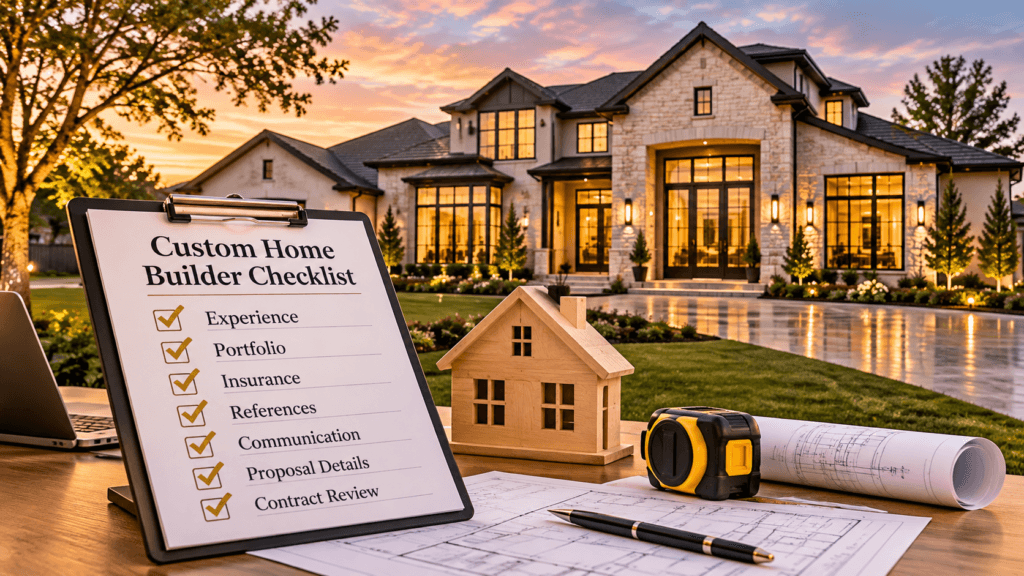
Choosing a builder is one of the most important decisions you’ll make when planning a custom home. If you’re researching how to find custom home builder options, the challenge is not simply finding companies that offer residential construction. You need to identify a builder whose experience, working approach, communication, and proposal match the home you want to build.
A builder may have an impressive portfolio but limited experience with your type of project. Another may offer a lower estimate but leave important costs or responsibilities unclear. Looking beyond the initial impression helps you make a more informed decision before committing to a major investment.
For homeowners in Houston, the process should include reviewing relevant projects, speaking with previous clients, checking documentation, and understanding exactly what each builder is offering.
How to Find Custom Home Builder Options for Your Project
Start by creating a shortlist of builders who work on projects similar to yours. Referrals, professional recommendations, local research, and completed project portfolios can all help you identify potential candidates.
However, finding names is only the first step. You need enough information to decide which builders are worth contacting.
Start With Referrals and Recommendations
Ask people who have recently built a custom home whether they would recommend their builder. Friends, family members, colleagues, and local professionals may be able to share useful experiences.
A referral can help you discover builders you might not find through a basic online search. More importantly, it gives you an opportunity to ask about the actual working relationship.
Try to find out:
- Was the builder clear about the scope of work and costs?
- Did they communicate regularly throughout the project?
- How did they handle unexpected problems or changes?
- Were decisions and responsibilities explained clearly?
- Would the homeowner work with the same builder again?
A recommendation is a useful starting point, but it should not replace your own research. Someone else’s project may have involved a different budget, design, location, or level of complexity.
Research Builders Online
Once you have a few names, review their websites and available project information.
Look for details about:
- The types of residential projects they undertake.
- Their approach to custom home construction.
- Examples of completed work.
- The services they provide.
- Their business information and contact details.
Pay attention to whether the information is specific. A website that only says a company builds quality homes does not tell you much about the kind of work it can handle.
Look for evidence that helps you understand the builder’s actual experience. If the website does not answer important questions, make a note to raise them during an initial conversation.
If you’re still learning about the responsibilities involved in this type of project, read what a custom home builder actually does to understand the role before comparing potential providers.
Build a Shortlist Before Scheduling Meetings
You do not need to contact every builder you find. Narrow your options to a manageable group based on the information available.
A useful initial shortlist should include builders who:
- Work on the type of home you want to build.
- Have relevant residential construction experience.
- Can show examples of comparable projects.
- Provide enough business information to evaluate their services.
- Are willing to discuss your requirements and explain their process.
The goal is to identify candidates worth investigating further, not to select someone based on a website or referral alone.
Look for Experience That Matches Your Project
A builder’s experience should be relevant to the home you want to create. The number of projects a company mentions is less useful than understanding what those projects involved.
For example, a homeowner planning a custom home with a particular architectural style, complex layout, or specific material requirements should look for evidence that the builder has handled comparable work.
Ask about experience with:
- Similar home sizes and layouts.
- Comparable architectural styles.
- The materials and finishes you are considering.
- Projects with similar site conditions.
- The level of customization your plans require.
You should also understand the builder’s role in the project. Will they manage construction activities directly? Who coordinates subcontractors? How are design decisions, material selections, and changes handled?
These questions help reveal whether the builder’s experience aligns with the practical demands of your project.
If you are still deciding what needs to be established before approaching builders, the custom home building guide, How to build a custom home: A step-by-step guide, provides broader context on the stages involved in building a home.
Review the Builder’s Portfolio Carefully
A portfolio helps you understand the kind of work a builder has completed. However, do not judge it only by attractive photographs.
Look at the projects in more detail. Consider whether the homes reflect the design requirements, construction complexity, and finish quality you expect.
When reviewing a portfolio, ask:
- Are there examples of homes similar to the one I want?
- Do the projects demonstrate different layouts and design requirements?
- Are the materials and finishes relevant to my preferences?
- Can the builder explain their involvement in each project?
- Are there completed projects you can visit or discuss with previous clients?
It is also useful to distinguish between a builder’s own completed work and images used for general inspiration. Ask whether the company was responsible for the construction of the homes shown and what its responsibilities included.
A portfolio should give you something concrete to discuss. If you like a particular project, ask what decisions were involved, what challenges came up, and how the builder handled them.
Check Credentials, Insurance, and Local Requirements
Before moving further, understand what documentation is relevant to the builder and the work involved.
This is particularly important in Houston because homeowners sometimes assume that every general contractor must hold a specific city or state general contractor license.
That is not how the local system works. The City of Houston’s permitting information explains that the city does not license or register general contractors. Certain regulated trades, such as electrical and plumbing work, have separate licensing requirements.
You can review the City of Houston’s permit submittal overview for information about permitting and contractor requirements.
For regulated trade professionals, use the Texas Department of Licensing and Regulation license search to check applicable licenses. This is a trade-specific verification step, not a general contractor license search.
You should also ask the builder for current insurance documentation and clarify what coverage applies to the project. Do not rely only on a verbal assurance. Request the relevant certificate and confirm its details with the issuing insurer when necessary.
Depending on your project, useful questions include:
- What insurance coverage does your company carry?
- Can you provide current documentation?
- Which subcontractors will perform regulated trade work?
- How are the qualifications of those trade professionals verified?
- Who is responsible for coordinating permits and inspections?
For Houston-specific permitting information, the Houston Permitting Center and its online permit portal are useful official starting points.
The aim is not to collect paperwork without understanding it. You want to know who is responsible for the work, what documentation is relevant, and how the project will meet applicable requirements.
Speak With Previous Clients
Speaking with previous clients can reveal details that a portfolio or company website cannot.
A completed home may look impressive, but you also want to understand what it was like to work with the builder. Ask whether the client was kept informed, how problems were handled, and whether the final work matched the agreed scope.
If the builder can provide references, consider asking:
- Was the original project scope explained clearly?
- Were costs and potential changes communicated properly?
- Did the builder respond to questions in a reasonable timeframe?
- How were unexpected issues handled?
- Were subcontractors and other project participants coordinated effectively?
- Were there disagreements, and how were they resolved?
- Would you hire this builder again?
Where possible, speak with clients whose projects are similar to yours. Their experience may be more relevant than feedback from a homeowner who completed a very different type of build.
You can also ask whether they would be comfortable discussing the project in more detail or showing you the completed home.
A reference should help you understand the builder’s working practices, not simply confirm that someone was satisfied.
Meet the Builders and Evaluate Communication
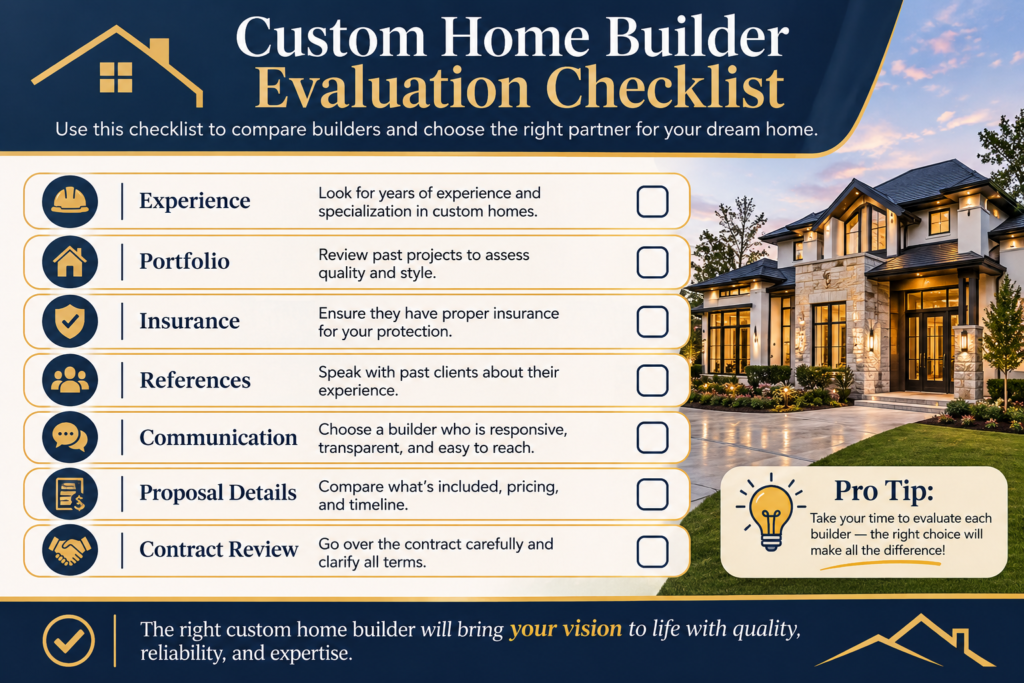
After reviewing portfolios, documentation, and references, arrange conversations with the builders who remain on your shortlist.
Use these meetings to explain what you want to build and understand how each company approaches the project.
You do not need a fully finalized design to start the conversation. However, having an initial idea of your requirements will make the discussion more useful.
Be prepared to explain:
- The type and approximate size of home you are considering.
- Your preferred location or property situation.
- The design features that matter most to you.
- Your initial budget expectations.
- Any particular materials, finishes, or functional requirements.
- Your expected decision-making process.
Then ask the builder how they would approach the next stages.
Pay attention to how they respond. Do they ask relevant questions? Do they explain what information they still need? Are they clear about what is included in their services and what may require additional professionals?
Communication matters throughout a custom home project because decisions, approvals, materials, costs, and construction activities need to be coordinated.
Before choosing a builder, understand:
- Who will be your main point of contact?
- How often will project updates be provided?
- How will design changes be discussed and approved?
- How will questions and unexpected issues be handled?
- Who will explain changes to the budget or schedule?
A good initial meeting should leave you with a clearer understanding of the builder’s approach, not just a positive sales impression.
Compare Proposals Before Making a Decision
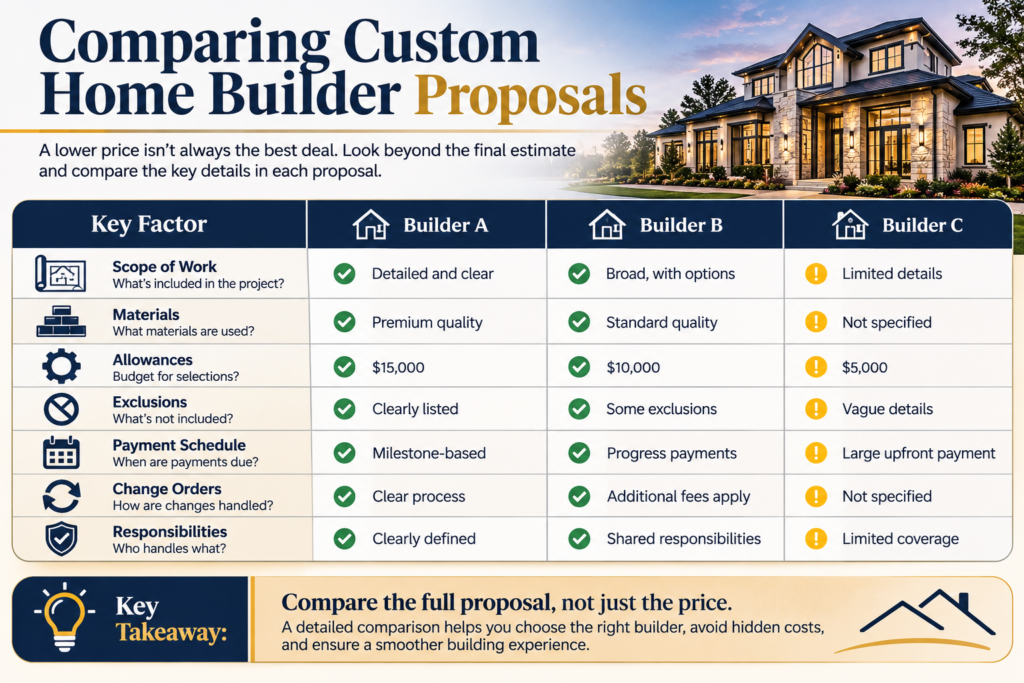
Once you have discussed your project with potential builders, review their proposals carefully. Do not compare them only by the final price.
Two proposals can look very different because they may include different scopes of work, materials, allowances, exclusions, and responsibilities.
Before comparing estimates, check whether each proposal explains:
| Item | What to review |
| Scope of work | Which construction activities and services are included? |
| Materials and finishes | Are specifications clear, or are they still subject to selection? |
| Allowances | What amounts have been allocated for items that have not been finalized? |
| Exclusions | Which costs, services, or activities are not included? |
| Payment schedule | When are payments due, and what work or milestones are they tied to? |
| Change orders | How will changes be priced, approved, and documented? |
| Project responsibilities | Who coordinates subcontractors, permits, inspections, and other activities? |
| Schedule | What assumptions and dependencies affect the proposed timeline? |
Look Beyond the Lowest Estimate
A lower proposal is not necessarily the better option.
For example, one builder may include certain materials and services in the estimate, while another may leave them as allowances or exclude them entirely. The second proposal can appear cheaper even though the final project cost may be different once those items are added.
Ask each builder to explain unclear figures, assumptions, and exclusions. If something is not included, find out whether it will be handled separately and how the cost will be determined.
Understand the Contract Before Signing
Once you have selected a preferred builder, review the proposed agreement carefully.
Make sure you understand the project scope, payment terms, responsibilities, change-order process, schedule provisions, and procedures for handling disagreements.
Do not assume that a verbal discussion automatically forms part of the written agreement. Important decisions and commitments should be documented.
If the agreement involves substantial financial or legal obligations, consider having a qualified construction attorney review it before signing.
The goal is to know exactly what you are agreeing to, what the builder is responsible for, and how changes will be handled once the project begins.
Watch for These Warning Signs
Some issues become easier to identify when you know what to look for. Be cautious if a builder:
- Cannot provide relevant examples of completed work.
- Avoids reasonable questions about project responsibilities.
- Is unwilling to provide references or explain previous projects.
- Gives an estimate with vague scope descriptions and unclear exclusions.
- Cannot explain how changes to the project will be priced and approved.
- Makes promises about cost or timing without understanding the project requirements.
- Provides incomplete or unclear insurance documentation.
- Pressures you to sign before you have reviewed the proposal and agreement.
- Relies on verbal assurances for important project details.
One concern does not automatically prove that a builder is unsuitable. However, repeated gaps in documentation, communication, or transparency deserve attention.
You should be comfortable asking questions and receiving clear explanations before making a commitment.
Final Checklist: Choosing the Right Custom Home Builder
Before making your decision, review the following points:
- The builder has experience relevant to my project.
- I have reviewed examples of comparable completed work.
- I understand the builder’s role and project responsibilities.
- I have checked relevant business and insurance documentation.
- I understand who will handle regulated trade work.
- I have spoken with previous clients or checked available references.
- The builder has explained how communication and project updates will work.
- I have reviewed the scope, allowances, exclusions, and payment schedule.
- I understand how changes and additional costs will be handled.
- I have reviewed the written agreement before signing.
If you’re still considering how to find custom home builder options, remember that the best decision comes from comparing the full working relationship, not just the portfolio or initial estimate.
The right choice should make sense for your project’s requirements, the builder’s relevant experience, the proposed scope, and the way both sides will work together.
Explore Custom Home Construction With Venus Builders
Finding a builder is easier when you know what to evaluate. Start with a clear understanding of your project, ask specific questions, and compare potential providers based on their experience, documentation, communication, and proposals.
Venus Builders provides residential construction services for homeowners exploring custom home projects in Texas.
If you are planning a custom home in Houston, explore Venus Builders’ residential construction services (https://venus-builders.com/services/residential-construction) to learn more about the available services and discuss your project requirements.
Frequently Asked Questions
How do I find a reliable custom home builder?
Start with referrals, local research, and examples of completed projects. Then evaluate relevant experience, insurance documentation, references, communication, and written proposals. Do not make a decision based only on a website or the lowest estimate.
How many custom home builders should I compare?
There is no fixed number. Start with a manageable shortlist of builders whose experience appears relevant to your project. Compare the strongest candidates in enough detail to understand their proposals, responsibilities, and working approaches.
What should I ask a custom home builder before hiring them?
Ask about comparable projects, project responsibilities, insurance, subcontractors, communication, payment schedules, allowances, exclusions, and change orders. You should also ask for references and clarification of anything that is not clear in the proposal.
Do general contractors need a license in Houston, Texas?
The City of Houston does not license or register general contractors. However, certain trades, including electrical and plumbing work, have separate licensing requirements. Homeowners should verify applicable trade qualifications and understand who is responsible for the work on their project.
Should I choose the custom home builder with the lowest estimate?
Not automatically. Compare the scope of work, material specifications, allowances, exclusions, payment terms, and responsibilities. A lower estimate may leave out items that another proposal includes, so make sure you are comparing equivalent work before deciding.
When should I sign a custom home construction contract?
Sign only after you understand the written scope, payment terms, responsibilities, schedule provisions, and change-order process. Make sure important discussions are reflected in the agreement, and consider professional legal review before committing to substantial obligations.